
The 2026 shift from hype to utility
The real estate sector is exiting its experimental phase. In 2026, artificial intelligence is no longer a marketing novelty or a pilot project for forward-thinking brokerages. It has become core operational utility, embedded in the daily workflows of valuation, leasing, and asset management. This transition marks a decisive move from theoretical potential to measurable financial impact.
The shift is driven by necessity, not just innovation. As capital markets tighten and operational margins compress, firms that rely on manual processes for data analysis and decision-making are falling behind. AI tools now handle the heavy lifting of data aggregation and predictive modeling, allowing professionals to focus on high-stakes strategy and client relationships. The technology has matured from a "nice-to-have" to a baseline requirement for competitive efficiency.
Investment trends confirm this structural change. Industry data projects that AI investment in real estate will grow at a compound annual rate of over 30% through 2033. This surge in capital reflects a clear consensus: the ROI of AI is no longer speculative. Firms are allocating budgets not to test AI, but to scale it across their entire portfolio operations.
Despite this growth, adoption remains uneven. Fewer than 15% of real estate professionals currently use AI for core valuation tasks, according to recent industry surveys. This gap highlights the opportunity for early adopters who can integrate these tools seamlessly into their existing tech stacks. The firms leading the charge are those that treat AI as an operational infrastructure, not a standalone product.
The result is a market where speed and accuracy are the new currency. AI-driven automated valuation models (AVMs) and predictive analytics provide real-time insights that were previously impossible to gather at scale. This capability allows investors to identify undervalued assets and mitigate risk with greater precision. The era of AI in real estate is no longer about what it could do; it is about what it is doing today.

Agentic AI for autonomous workflows
The 2026 real estate market is shifting from conversational assistants to autonomous agents capable of executing complex, multi-step transactions. Unlike previous iterations of AI that required constant human prompting, agentic AI systems now operate with a degree of independence, sourcing deals, performing preliminary due diligence, and preparing documentation without human intervention at every step.
According to MRISoftware’s 2026 PropTech trends, this transition marks a move toward "meaningful AI" that integrates directly into end-to-end platforms. These agents do not just retrieve data; they act on it. For example, an agent can scan multiple listing services for properties meeting specific financial criteria, cross-reference them against zoning regulations, and generate a preliminary investment memo before a human analyst even logs in.
This autonomy is critical for handling the volume of data in today’s high-stakes market. While chatbots handle routine inquiries, agentic AI manages the heavy lifting of deal flow. It reduces the lag between opportunity identification and action, allowing firms to move faster than competitors still relying on manual workflows. The result is a streamlined pipeline where human expertise is reserved for final validation and strategic decision-making rather than data aggregation.
Comparing top property data analytics platforms
Selecting the right AI platform depends on your specific operational needs. The market has moved past simple listing aggregation toward platforms that integrate predictive modeling, automated valuation, and workflow automation. Investors must evaluate these tools based on data depth, integration capabilities, and pricing structure.
The following comparison outlines four leading platforms: Base Radar, PropStream, Reonomy, and HouseCanary. Each serves a distinct segment of the real estate market, from residential flipping to commercial asset management.
| Platform | Primary Focus | Data Depth | Pricing Model |
|---|---|---|---|
| Base Radar | Residential & Multi-Family | Comprehensive MLS, tax, and ownership history | Tiered subscription |
| PropStream | Wholesaling & Flipping | Motivated seller signals, comps, and liens | Per-user monthly |
| Reonomy | Commercial Real Estate | Ownership, zoning, and cap rate estimates | Enterprise quote |
| HouseCanary | Valuation & Risk | Proprietary valuation models and market forecasts | API or enterprise |
Base Radar excels in residential markets by combining MLS data with ownership history and tax records. It is particularly useful for investors seeking off-market deals in specific neighborhoods. PropStream focuses on actionable signals for wholesalers, such as absentee ownership and code violations. Reonomy dominates the commercial sector, providing deep ownership chains and zoning data for multifamily and office assets. HouseCanary offers institutional-grade valuation models, ideal for risk assessment and portfolio analysis.
When choosing a platform, consider your deal volume and asset class. Residential investors often benefit from tools with strong lead generation features, while commercial investors require granular ownership and zoning data. Always verify data freshness and integration capabilities with your existing CRM before committing to a subscription.
Using AI for precise investment forecasting
Automated valuation models (AVMs) have moved beyond simple comparative market analysis. In 2026, predictive analytics integrates granular data—such as local zoning changes, infrastructure projects, and hyper-local crime statistics—to forecast property values with significantly higher precision. This shift reduces the risk of overpaying and improves the accuracy of return on investment calculations.
1. Integrate multi-source data streams
Legacy valuation tools rely heavily on recent sales of comparable properties. Modern AI systems ingest thousands of data points, including satellite imagery of neighborhood development and real-time economic indicators. This broader data set allows for more accurate pricing models that reflect true market dynamics rather than lagging indicators.
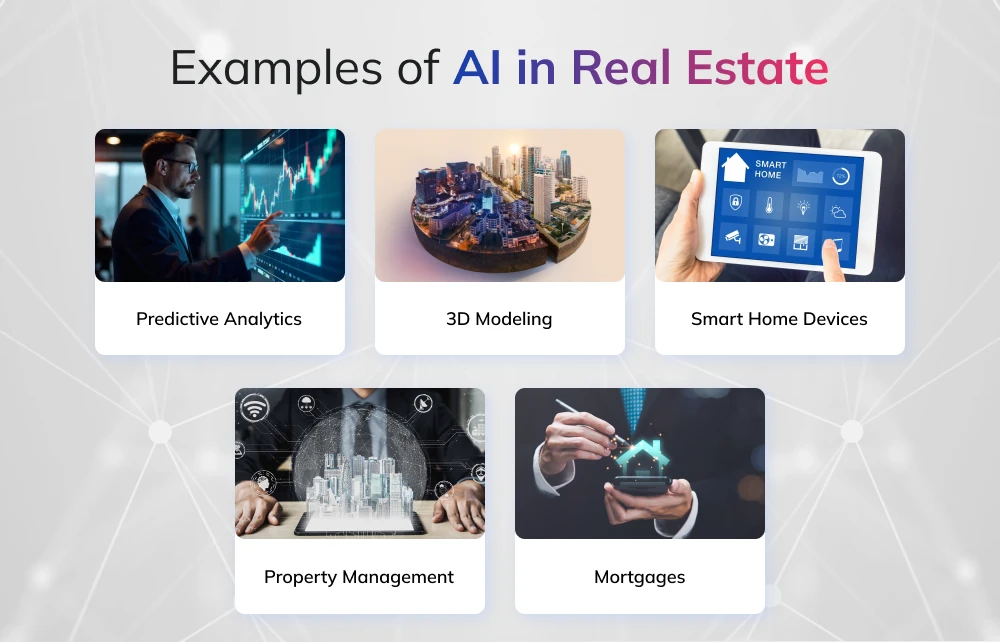
Integrate data from municipal planning departments, utility usage patterns, and local economic reports. This multi-source approach provides a comprehensive view of a property's potential, moving beyond square footage and bedroom counts to understand the underlying value drivers of a specific location.
2. Deploy predictive risk models
Predictive analytics enables investors to simulate various market scenarios. By stress-testing portfolios against potential interest rate hikes, recession indicators, or local regulatory changes, investors can identify vulnerabilities before they materialize. This proactive risk assessment is critical for maintaining portfolio resilience in volatile markets.
Use AI-driven simulation tools to model portfolio performance under different economic conditions. These models help identify which assets are most sensitive to market shifts, allowing for strategic adjustments to mitigate potential losses and optimize long-term returns.
3. Validate with automated valuation models
Automated Valuation Models (AVMs) provide instant, data-driven property valuations. While not a replacement for physical appraisals, AVMs offer a consistent baseline for thousands of properties, enabling rapid due diligence. Leading firms use AVMs to filter out underperforming assets and identify undervalued opportunities with high confidence.

Implement AVMs to generate instant valuation reports for target properties. This speed allows investors to evaluate dozens of opportunities in the time it takes to inspect one, ensuring that capital is deployed quickly and efficiently toward the most promising assets.
4. Monitor and adjust in real time
Market conditions change rapidly. AI systems continuously monitor these changes, updating forecasts and risk assessments in real time. This dynamic approach allows investors to adjust their strategies proactively, selling or acquiring assets based on current trends rather than historical data.
Set up automated alerts for significant market shifts, such as sudden changes in local rental yields or unexpected zoning approvals. These real-time signals enable investors to react swiftly to emerging opportunities or threats, maintaining a competitive edge in the market.
Top AI tools for 2026 real estate investors
The market has shifted from novelty to necessity. In 2026, successful investors are not just using AI for marketing; they are embedding it into underwriting, due diligence, and portfolio management. The tools that matter are those that reduce friction in high-stakes decisions, turning unstructured data into actionable intelligence.
Investors should focus on platforms that integrate directly into their existing workflow rather than standalone novelty apps. The goal is efficiency and accuracy, not just automation. Below are the specific categories of tools that are moving markets this year.

Underwriting and Deal Analysis
AI-driven underwriting platforms now process property data faster than human analysts. These tools scrape public records, recent sales, and market trends to generate instant pro formas. For investors, this means faster offer submission and more precise risk assessment. The best tools in this category offer real-time sensitivity analysis, allowing you to adjust variables like interest rates or vacancy rates and see the impact on cash flow instantly.
Property Management Automation
For those managing active portfolios, AI is streamlining tenant screening and maintenance coordination. Intelligent screening tools analyze rental history, credit data, and behavioral signals to predict tenant reliability with greater accuracy than traditional checks. Maintenance bots triage service requests, dispatch vendors, and track costs, reducing administrative overhead significantly.
Market Intelligence and Lead Generation
Predictive analytics tools are identifying emerging neighborhoods before they hit mainstream radar. By analyzing migration patterns, infrastructure spending, and local economic indicators, these platforms help investors spot undervalued assets. Simultaneously, AI-powered lead generation uses natural language processing to engage potential sellers and buyers on social media and listing sites, qualifying leads before they ever reach your inbox.


As an Amazon Associate, we may earn from qualifying purchases.
Frequently asked questions about real estate AI
Is AI adoption actually delivering ROI in 2026, or is it just hype? According to PwC and MetaProp, the industry has moved past the novelty phase. In 2026, AI adoption is driven by measurable automation and productivity gains rather than speculative potential. Firms that have integrated AI into their workflows report significant reductions in manual data processing, making it a core operational requirement rather than an optional experiment.
How much does it cost to implement AI tools for real estate operations? Costs vary based on the scope of implementation, but the trend is shifting toward unified, end-to-end platforms. MRISoftware notes that organizations are moving away from fragmented, point-solution tools toward integrated ecosystems. This consolidation reduces licensing overhead and IT maintenance costs, making the total cost of ownership more predictable for mid-to-large scale operators.
What are the biggest risks of using AI in real estate decision-making? The primary risks are data readiness and governance. AI models are only as reliable as the data they are trained on. Without strict governance frameworks, organizations risk making decisions based on biased or outdated information. Ensuring data integrity is now a critical component of any AI strategy, as highlighted in recent 2026 proptech trend analyses.
No comments yet. Be the first to share your thoughts!