

The 2026 shift to hybrid forecasting
The landscape of meteorological prediction has undergone a structural change in 2026. For years, the industry relied on two distinct approaches: traditional Numerical Weather Prediction (NWP) models, which simulate atmospheric physics but require immense computational power, and purely statistical AI models, which learn patterns from historical data but often lack physical consistency. The current standard is no longer one or the other, but a hybrid system that merges the speed of machine learning with the rigor of physical laws.
Purely statistical AI models, as noted in a 2026 Rice University study, can produce forecasts with remarkable efficiency by identifying correlations in historical datasets. However, without the constraints of physics, these models can generate meteorologically impossible scenarios, such as violating conservation of mass or energy during extreme events. This limitation posed a significant risk for risk management and financial planning, where accuracy in low-probability, high-impact events is critical. Hybrid models address this by embedding physical equations into the AI’s learning process, ensuring that predictions remain grounded in reality.
This shift is not merely technical; it is an economic resilience play. By combining the computational efficiency of AI with the reliability of NWP, forecasters can run higher-resolution simulations more frequently. Environment and Climate Change Canada recently launched an AI-enhanced weather model specifically to strengthen forecasting for severe weather, signaling that government agencies are prioritizing this hybrid approach for public safety and infrastructure planning.
The result is a forecasting ecosystem that is both faster and more trustworthy. For finance and risk management sectors, this means earlier and more accurate warnings for storm systems, allowing for better capital allocation and operational adjustments. The transition to hybrid forecasting represents a maturation of AI in meteorology, moving from experimental novelty to essential infrastructure.
Statistical models needed physical limits to account for
To make AI weather forecasting decisions practical for real-world application, we must distinguish between theoretical capabilities and operational requirements. A robust selection process starts with the reader's actual constraint: the need for physically consistent data that does not require post-hoc correction.
Must-have criteria include:
- Physical Consistency: The model must adhere to conservation laws (mass, energy, momentum) to prevent nonsensical outputs during extreme events.
- Computational Efficiency: The ability to run high-resolution ensembles frequently enough to support real-time risk decisions.
- Source Transparency: Clear attribution to official data streams from NOAA, ECCC, or other recognized meteorological bodies.
Nice-to-have features, such as proprietary user interfaces or additional data layers, should only be considered after these core requirements are met. If a recommendation only works in an idealized simulation, it must be flagged as such, with a fallback path to traditional NWP models for critical infrastructure planning.
Hurricane forecasting improvements in 2026
Hybrid modeling has shifted hurricane forecasting from reactive tracking to proactive intensity prediction. By fusing traditional physics-based numerical weather prediction with machine learning algorithms, meteorologists can now process vast datasets from satellite imagery, ocean buoys, and reconnaissance aircraft in real time. This convergence allows for more precise estimates of storm strength and track, which is critical for risk management and capital allocation in insurance and energy sectors.
NOAA’s Atlantic Oceanographic and Meteorological Laboratory (AOML) has deployed these advanced models during the 2026 hurricane season. Scientists aboard WP-3D Orion aircraft fly directly into developing and mature storms, collecting high-resolution data that feeds into hybrid systems. These systems correct for biases in traditional models, particularly regarding rapid intensification—a phenomenon that has historically plagued forecast accuracy and caused significant economic disruptions.
Research from Rice University further validates this approach, demonstrating that AI-driven tools can identify subtle atmospheric patterns that precede sudden storm strengthening. Their models analyze historical data alongside live inputs to predict intensity changes hours or even days before they become apparent in conventional forecasts. This capability reduces uncertainty for downstream industries, allowing for more robust contingency planning.
The integration of these technologies creates a more resilient forecasting infrastructure. For markets sensitive to weather risk, such as catastrophe bonds and agricultural commodities, the ability to anticipate storm behavior with greater precision translates directly into reduced volatility and more accurate pricing models.
The CAT bond index (NYSE:CAT) serves as a proxy for how the market prices hurricane risk. As hybrid forecasting models improve, the volatility in these indices often reflects the market’s confidence in the underlying data. Investors monitor these charts to gauge how effectively new AI tools are mitigating the financial impact of severe weather events.
Impact on market risk and resilience
Improved hurricane forecasts directly influence capital markets by reducing the information asymmetry surrounding natural disasters. When forecasters can provide more accurate intensity and track predictions, insurers can better model potential losses, and energy companies can optimize supply chain logistics ahead of storm landfalls.
This precision allows for more dynamic hedging strategies. For example, if a hybrid model indicates a higher probability of a storm strengthening rapidly, traders can adjust their positions in catastrophe bonds or reinsurance contracts before the market fully prices in the risk. This proactive approach minimizes the shock to portfolios when storms eventually make landfall.
In addition, the economic resilience of coastal communities benefits from these advancements. Local governments and emergency management agencies use these forecasts to allocate resources more efficiently, reducing the overall cost of disaster response and recovery. This societal benefit complements the financial stability gained by institutional investors and insurers.
As these hybrid models become standard practice, the frequency of forecast errors is expected to decline. This trend will likely lead to a more stable insurance market, with premiums reflecting actual risk rather than the uncertainty of outdated forecasting methods. The result is a more efficient allocation of capital toward true risk mitigation efforts.
Deploying AI for severe weather resilience
Government agencies are moving beyond experimental phases to integrate hybrid AI models into critical infrastructure planning. Environment and Climate Change Canada (ECCC) recently launched an AI-driven weather model designed to strengthen forecasting for severe weather events, marking a significant shift in how public safety is managed. This deployment prioritizes the intersection of meteorological accuracy and economic resilience, ensuring that forecast data translates directly into actionable risk mitigation strategies.
The integration of these models allows agencies to process vast amounts of historical and real-time data more efficiently than traditional numerical weather prediction systems. By leveraging hybrid approaches, ECCC can reduce computational costs while maintaining high precision in storm tracking and intensity prediction. This capability is essential for early warning systems, giving emergency responders more lead time to mobilize resources and protect vulnerable populations.
For the finance and risk management sectors, this operational shift signals a new standard for reliability. Official sources like ECCC and NOAA are now the primary benchmarks for severe weather data, replacing older, less accurate models. As these systems become the backbone of national infrastructure planning, the economic impact of weather-related disruptions is expected to decrease, providing greater stability for industries dependent on predictable environmental conditions.
Market tools for weather risk assessment
Financial institutions and enterprise risk managers now rely on hybrid AI-weather platforms to translate meteorological data into actionable economic models. The convergence of deep learning with physical simulations allows for real-time assessment of storm trajectories and intensity, moving beyond static historical averages to dynamic, probabilistic forecasting.
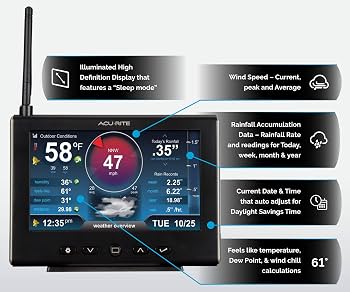
For organizations requiring granular operational resilience, specialized software suites provide the necessary infrastructure. These tools integrate NOAA and ECCC data streams with proprietary AI engines to predict supply chain disruptions and insurance exposure. The following market solutions are widely adopted for their accuracy in hurricane and severe weather modeling:


As an Amazon Associate, we may earn from qualifying purchases.
These tools enable proactive decision-making, allowing firms to hedge against volatility before a storm makes landfall. By leveraging the efficiency of AI-accelerated models, risk managers can process vast datasets to identify patterns that traditional methods might miss, ensuring more robust financial preparedness.
No comments yet. Be the first to share your thoughts!